Jib Crane on Wheels: A Complete Buyer’s Guide
A jib crane on wheels — also called a portable jib crane or mobile jib crane — is one of the most practical lifting solutions for workshops that need flexibility. Unlike fixed overhead systems that lock you into one work area, a jib crane on wheels follows your production flow, serving multiple stations with a single investment.
But buying a jib crane on wheels is not as simple as picking the first model you find. Load capacity, wheel type, base design, hoist selection, and safety certifications all factor into the decision. This complete buyer’s guide covers everything you need to know before making your purchase.
What Is a Jib Crane on Wheels?
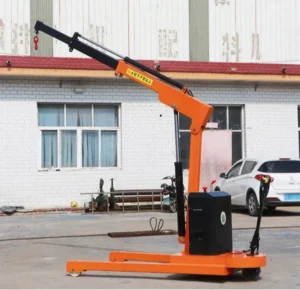
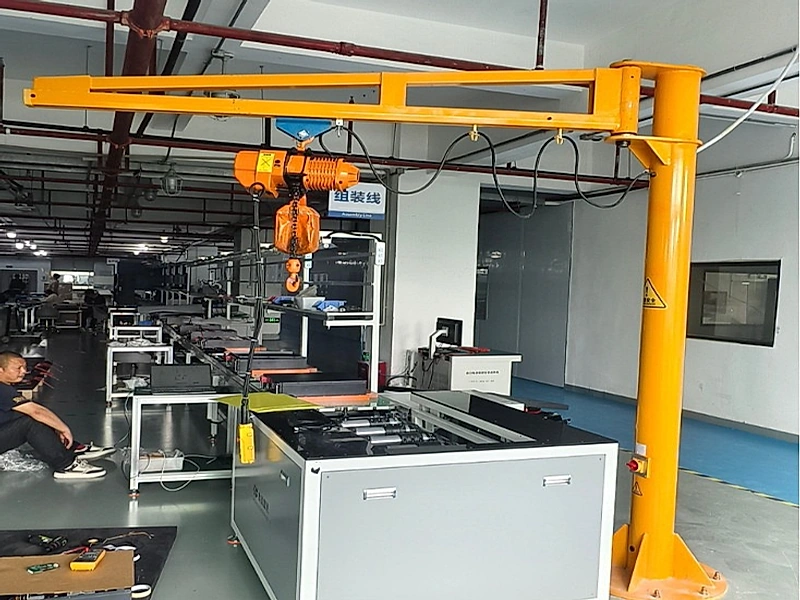
A jib crane on wheels is a self-contained lifting device consisting of a vertical mast, a horizontal rotating boom (jib), a hoist or trolley, and a wheeled base. The entire unit can be moved by hand or powered drive to different locations within a facility. Once positioned, the boom rotates 360° to serve a circular work area around the mast.
Key components of a jib crane on wheels:
- Base frame: Contains the counterweight or ballast to stabilize the crane during lifting. Fitted with casters or wheels for mobility.
- Mast (pillar): The vertical column that supports the boom and transfers the load to the base. Made from structural steel.
- Boom (jib): The horizontal arm that extends from the mast. Can rotate 360° and carries the hoist or trolley.
- Hoist or trolley: The lifting mechanism — manual chain, electric chain, or air hoist — that moves along the boom.
- Wheels or casters: At least two swivel casters with brakes for positioning and locking in place during operation.
Why Choose a Jib Crane on Wheels?
Workshop managers choose a jib crane on wheels over fixed cranes for several compelling reasons:
- No building modifications: A jib crane on wheels requires no anchoring, no foundation bolts, and no structural reinforcement. Roll it in and start lifting the same day.
- Multi-station coverage: One mobile unit serves multiple workstations. Move it from the machining area in the morning to the assembly line in the afternoon.
- Rental-friendly: Ideal for leased facilities where permanent installations are prohibited by the lease agreement.
- Reconfigurable layout: As your workshop layout changes, your jib crane on wheels moves with it — no costly relocation or reinstallation.
- Lower upfront cost: A quality jib crane on wheels costs significantly less than a comparable overhead crane system, especially when factoring in installation and structural work.
Capacity and Sizing: Getting the Numbers Right
The capacity of a jib crane on wheels ranges from 250 kg for light-duty workshop models to 5,000 kg for heavy-duty industrial units. Sizing a jib crane on wheels correctly requires evaluating three interrelated variables:
Load Weight
Determine the heaviest item you will lift. Add 25% as a safety buffer. A jib crane on wheels must never be operated at its absolute maximum rated capacity — mechanical wear and dynamic loading events can push the crane beyond its safe limit.
Boom Length vs. Capacity Trade-off
One of the most misunderstood aspects of a jib crane on wheels is that capacity decreases as boom length increases. A crane rated for 2,000 kg at 2 m boom extension may only be rated for 1,200 kg at 4 m extension. Always check the capacity chart for your specific boom length requirement.
Duty Cycle
How many lifts per hour? A jib crane on wheels used for occasional maintenance lifts (1–5 lifts per day) has very different mechanical requirements than one used in production line feeding (20+ lifts per hour). For high duty cycles, invest in a reinforced mast, higher-grade hoist motor, and heavy-duty casters.
Wheel and Caster Selection: The Foundation of Mobility
The wheels on your jib crane on wheels are not an afterthought — they are critical to both mobility and operational safety. Choose based on your floor type and load:
| Wheel Type | Best Floor Surface | Load Capacity | Noise Level |
|---|---|---|---|
| Polyurethane | Smooth concrete, epoxy, tile | Medium | Low |
| Nylon / Hard plastic | Smooth concrete | Medium | Moderate |
| Steel | Rough concrete, outdoor | High | High |
| Pneumatic | Gravel, dirt, uneven terrain | Low to medium | Low |
Brake requirements: Any jib crane on wheels must have at least two locking casters (preferably four) that can be engaged during lifting operations. Locking prevents the crane from rolling under load, which is a serious safety hazard.
Base Design: Counterweight vs. Outrigger
Every jib crane on wheels relies on its base for stability. There are two primary base designs:
Counterweight Base
The base itself contains steel or concrete ballast. This is the simplest and most common design for a jib crane on wheels. It provides stability through sheer mass. Counterweight bases are self-contained and require no setup time — just position, lock the brakes, and lift.
Outrigger Base
Outrigger arms extend from the base to widen the footprint during operation. An outrigger-equipped jib crane on wheels can offer higher capacity than a counterweight-only model of the same overall weight. The trade-off is additional setup time — outriggers must be deployed and retracted each time the crane is moved.
Hoist Options for a Jib Crane on Wheels
The hoist is the heart of your jib crane on wheels. Three main types are available:
- Manual chain hoist: Economical, requires no power, best for intermittent light lifting. Operated by pulling the hand chain. Slower but very reliable.
- Electric chain hoist: The most popular choice for a jib crane on wheels in industrial settings. Single-speed or two-speed options. Pendant or wireless remote control. Requires power but delivers fast, effortless lifts.
- Air hoist: Pneumatic power for hazardous environments where electrical sparks are a concern. Ideal for paint booths, chemical plants, and explosive atmospheres.
For most workshops, an electric chain hoist with pendant control offers the best balance of speed, cost, and ease of use for a jib crane on wheels.
Safety Certifications and Standards
When buying a jib crane on wheels, ensure the unit complies with applicable safety standards. Reputable manufacturers design their equipment to meet or exceed:
- ASME B30.11: Monorails and Underhung Cranes (applicable to jib cranes)
- ASME B30.16: Overhead Hoists (Underhung)
- OSHA 1910.179: Overhead and Gantry Cranes (general safety requirements)
- CE marking: For use in European markets — confirms compliance with EU safety directives
Always request the manufacturer’s load test certificate and inspection documentation before accepting delivery of your jib crane on wheels.
Installation and Maintenance Tips
While a jib crane on wheels requires no structural installation, proper setup and maintenance are still essential:
- Floor inspection: Ensure the floor is level and free of debris before positioning the crane. Uneven floors reduce stability.
- Wheel maintenance: Lubricate wheel bearings quarterly. Inspect for flat spots or cracking on polyurethane wheels.
- Boom rotation check: Verify that the boom rotates freely and smoothly. Grease the rotation bearing annually.
- Hoist inspection: Perform daily visual inspection of the load chain, hooks, and limit switches.
- Load test: Conduct a full-capacity load test annually or after any major repair.
Jib Crane on Wheels vs. Portable Gantry Crane
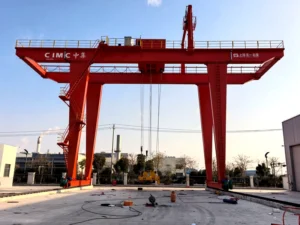
A common point of confusion is the difference between a jib crane on wheels and a portable gantry crane. A jib crane on wheels has a single mast and rotating boom, providing 360° coverage from a fixed position. A portable gantry crane has two legs with a bridge beam, offering linear travel along the legs and through the frame. Choose a jib crane on wheels when you need rotational coverage at multiple stations. Choose a portable gantry crane when you need to lift and move loads linearly, such as lifting an engine out of a vehicle.
Final Buying Checklist
Before you purchase your jib crane on wheels, confirm the following:
- Rated capacity meets your heaviest load plus 25% safety margin
- Boom length and lift height cover your workstation area
- Wheel type matches your floor surface
- Base design (counterweight or outrigger) fits your mobility needs
- Hoist type matches your lifting frequency and power supply
- Safety certifications meet your local regulatory requirements
- Manufacturer provides load test certificate and warranty documentation
A jib crane on wheels is a powerful tool that can transform your workshop’s material handling efficiency. By following this buyer’s guide, you will be equipped to choose a unit that delivers safe, reliable, and flexible service for years to come.
For expert advice on configuring the right jib crane on wheels for your specific application, contact the Suncan Crane team. We offer free consultation and custom quotations for workshops worldwide.