Comprehensive Guide to Crane Types: Gantry, Overhead, Jib & Smart Cranes for Global Projects
Introduction to Major Industrial Crane Classifications
In the dynamic global market for export crane equipment, understanding the distinct types, structural compositions, and optimal application scenarios is crucial for engineers, project managers, and procurement specialists. As a leading global crane manufacturer, we provide this authoritative guide to gantry cranes, overhead cranes, jib cranes, and intelligent crane solutions. The global crane equipment market, projected to reach approximately $1500 billion by 2026, demands precise selection to match project requirements with the right machinery. This guide will help you navigate the industrial crane for sale landscape, focusing on CE certified and ISO certified options for construction, ports, mining, and logistics.
1. Gantry Cranes: Structure and Global Application Scenarios
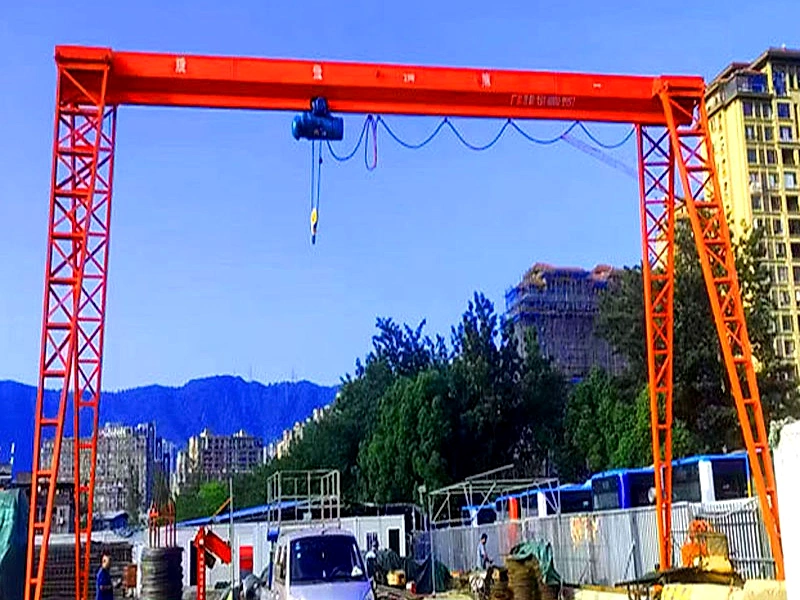
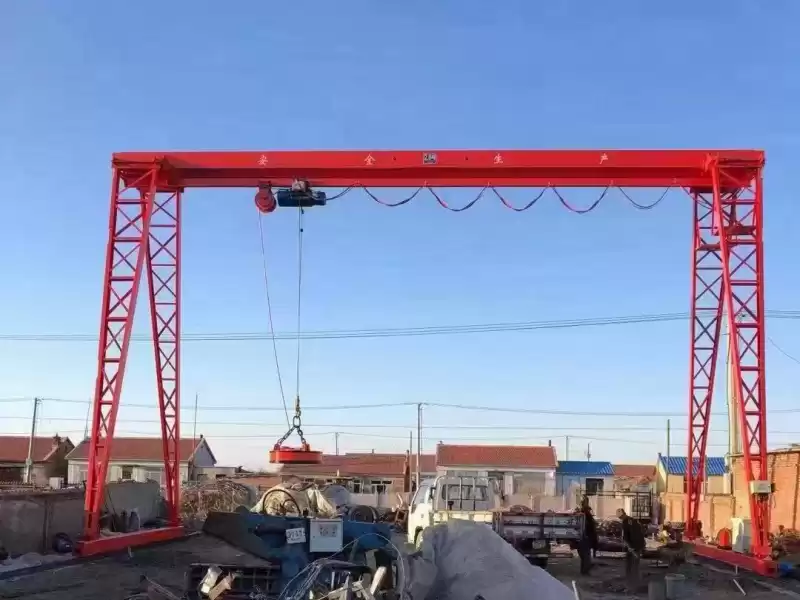
Gantry cranes, characterized by their leg-supported framework moving on ground rails or wheels, are a cornerstone of heavy lifting in open areas. Their modular design typically includes a robust double-girder or single-girder bridge, end carriages with travel mechanisms, and high-performance hoisting trolleys.
Core Components & Technical Parameters:
Main Girder: Engineered with box or truss design for spans from 10m to 40m+.
Legs & End Carriages: Provide stability and facilitate travel along the runway.
Hoist & Trolley: Configurable with wire rope or chain hoists, offering load capacities from 5 to 500+ tons.
Power System: Electric (3-phase) or diesel-hydraulic for outdoor, off-grid applications.
Primary Use Cases for International Buyers:
Port & Shipyard Operations: For loading/unloading shipping containers and heavy ship components. Custom gantry crane for port operations with high-duty cycles (FEM Class A5-A8) are essential.
Heavy Fabrication Workshops: Ideal for outdoor assembly of large structural steel, wind turbine components, and prefabricated modules.
Infrastructure Projects in Asia/Africa: Widely used in bridge construction, dam projects, and railway yards due to their mobility and no requirement for an overhead runway system. Affordable tire-mounted gantry cranes for African infrastructure projects offer flexible solutions.
2. Overhead Cranes (Bridge Cranes): Design and Industrial Applications
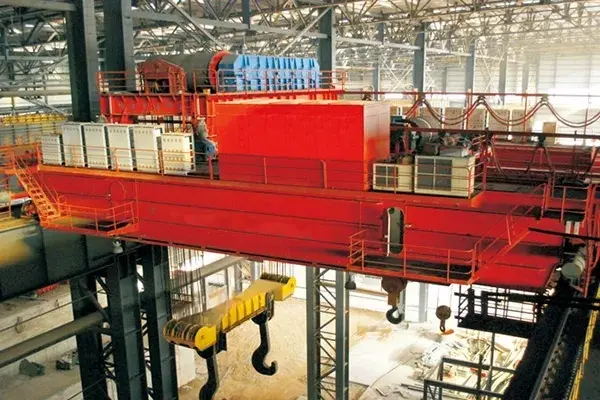
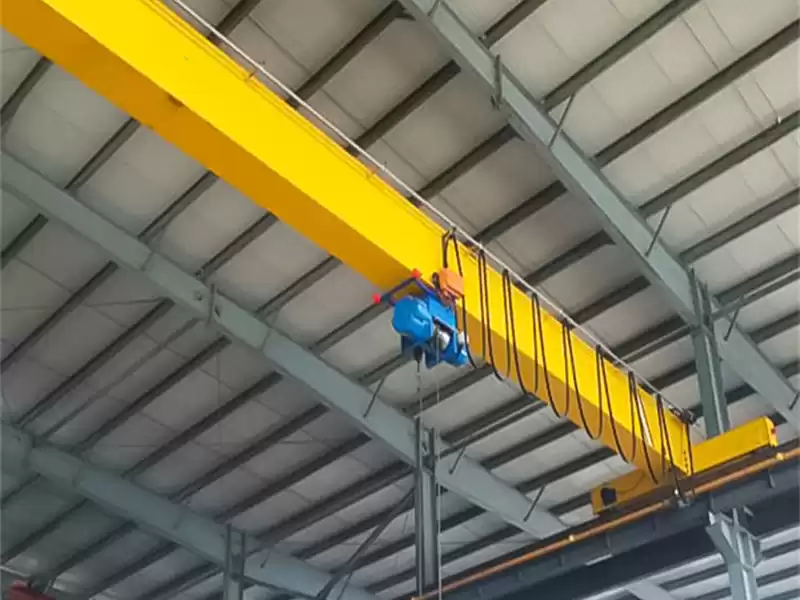
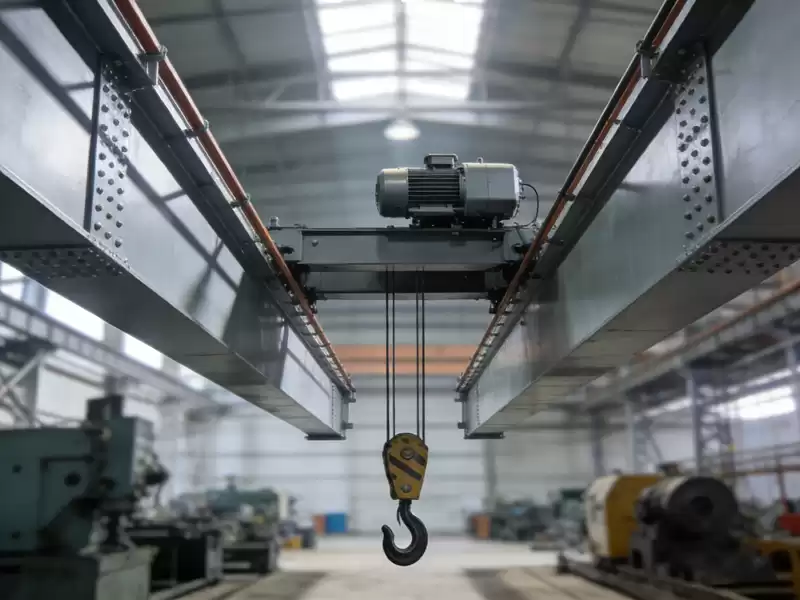
Overhead traveling cranes, or bridge cranes, operate on elevated runways fixed to a building’s support structure. They maximize floor space utilization and are the workhorse of enclosed industrial facilities.
Classification and Key Features:
Top-Running vs. Under-Running: Top-running cranes have end trucks that ride on rails atop the runway beam, offering higher lift heights and capacities. Under-running (underhung) cranes suspend from the bottom flange of the runway beam.
Single vs. Double Girder: Single-girder designs are cost-effective for capacities up to 20 tons. Double-girder cranes provide superior hook height, heavier capacity (up to 100+ tons), and can integrate auxiliary hoists.
Control Systems: Include pendant, radio remote, or cabin-operated controls with advanced load moment limiters for safety.
Ideal Application Scenarios:
Manufacturing & Assembly Plants: For precise handling of machinery, automotive parts, and production lines. High-quality overhead crane for construction of factory buildings is a frequent requirement in Europe.
Warehousing & Logistics Centers: Facilitate the movement of heavy pallets, steel coils, and bulk materials.
Power Stations & Maintenance Bays: Used for servicing turbines, transformers, and other critical heavy equipment. Compliance with ISO and FEM standards is non-negotiable here.
3. Jib Cranes: Versatile Solutions for Localized Lifting
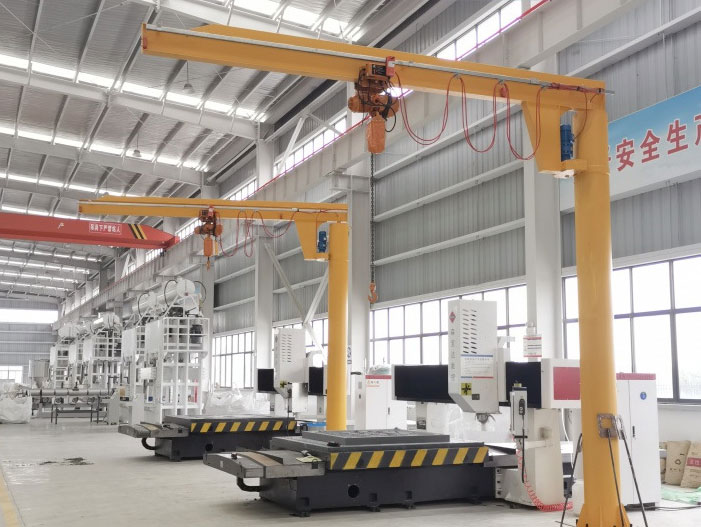
Jib cranes provide rotational coverage within a confined circular area. They are perfect for supplementing larger crane systems with localized, repetitive lifting tasks.
Structural Types and Composition:
Wall-Mounted Jib Cranes: Fixed to a building column or wall, offering 180-200° rotation. Ideal for saving floor space.
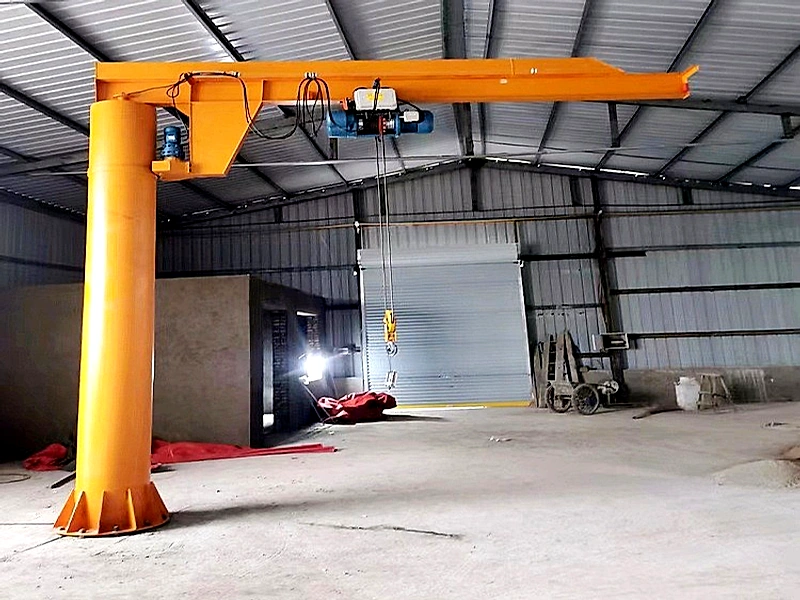
Floor-Mounted & Pillar Jib Cranes: Self-supporting with a foundation, providing full 360° rotation.
Articulating Jib Cranes: Feature a two-arm telescopic boom-like design, offering enhanced flexibility to reach around obstacles.
Key Elements: Include a mast or wall bracket, a rotating boom (I-beam or tubular design), and a hoist (often electric chain).
Targeted Use Cases:
Workstation Material Handling: Feeding machines, assembly stations, and loading/unloading conveyors.
Dockside and Maintenance Areas: For handling engines, pumps, and tools in repair shops, garages, and small docks.
Integration with Larger Systems: Often used in conjunction with overhead cranes to provide precise positioning at specific work cells.
4. Smart/Intelligent Cranes: The Future of Lifting Technology
Intelligent crane solutions integrate automation, IoT sensors, and data analytics to enhance safety, efficiency, and operational insight. This represents the high-end trend driving demand in mature markets like Europe and North America.
Core Technological Components:
Automation & Control Systems: Programmable Logic Controllers (PLCs) for automated pick-and-place, path planning, and collision avoidance.
Advanced Sensor Fusion: Includes load moment limiters, anti-sway systems, position sensors, and condition monitoring sensors for wire rope and brakes.
Connectivity & Data: IoT modules for real-time health monitoring, predictive maintenance alerts, and integration with Warehouse Management Systems (WMS) or Enterprise Resource Planning (ERP).
Drive & Motion Control: Variable Frequency Drives (VFDs) for smooth acceleration, precise positioning, and energy savings.
Applications Driving Global Demand:
Automated Storage/Retrieval Systems (AS/RS): In smart logistics warehouses and distribution centers.
High-Precision Manufacturing: For aerospace, automotive, and semiconductor industries where repeatability is critical.
Remote & Hazardous Operations: In nuclear facilities, chemical plants, or mines, where remote operation minimizes human risk.
Fleet Management for Large Ports: Integrating data from multiple smart gantry cranes to optimize container movement and port throughput.
Choosing the Right Crane for Your Cross-Border Project
Selecting between a gantry, overhead, jib, or smart crane depends on your application, site conditions, budget, and long-term operational goals. As an experienced hydraulic truck crane supplier and manufacturer of comprehensive custom crane solutions, we advise considering:
Load, Span, and Height: Define your core technical parameters.
Duty Cycle & Standards: Match the crane’s working class (FEM/ISO) to your operational intensity.
Site Infrastructure: Determine if you have an existing building for an overhead crane or need a standalone gantry crane.
Regulatory Compliance: Ensure CE certification for Europe and other region-specific standards for seamless crane export customs declaration.
Total Cost of Ownership: Consider energy efficiency, maintenance needs, and the productivity gains from intelligent features.
Ready to specify the optimal crane for your international project? Our team provides custom crane solutions with full export documentation support, including certificates of origin, CE/ISO documentation, and shipping under FOB or CIF terms.
Contact us today for a detailed quotation and technical consultation tailored to your region’s requirements.