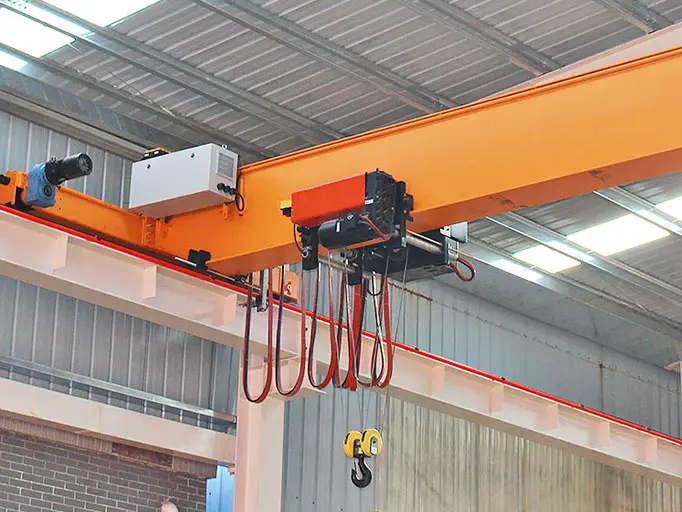
How to Operate an Overhead Crane: A Step-by-Step Safety Guide
📌 Authoritative Notice: This guide follows OSHA 1910.179 and ASME B30.2 standards for overhead crane operation. Always refer to your equipment manual and receive proper training before use.
1. Pre-Operation Inspection
Before starting, visually inspect the crane and its surroundings. A daily checklist prevents accidents and equipment damage.
- ✅ Runway & bridge: Check for debris, obstructions, or loose bolts on the rails and end stops.
- ✅ Wire rope/chain: Look for kinks, broken strands, or excessive wear (refer to discard criteria).
- ✅ Hooks & latches: Ensure safety latches spring back, hook throat opening is not deformed.
- ✅ Limit switches: Test hoist upper/lower limit devices (if accessible).
- ✅ Controls & pendants: Verify all buttons respond, emergency stop works.
⚠️ Never operate if you find any damage, unusual noise, or malfunction. Tag the crane “Out of Service” and report to supervisor.
2. Prepare for Lifting
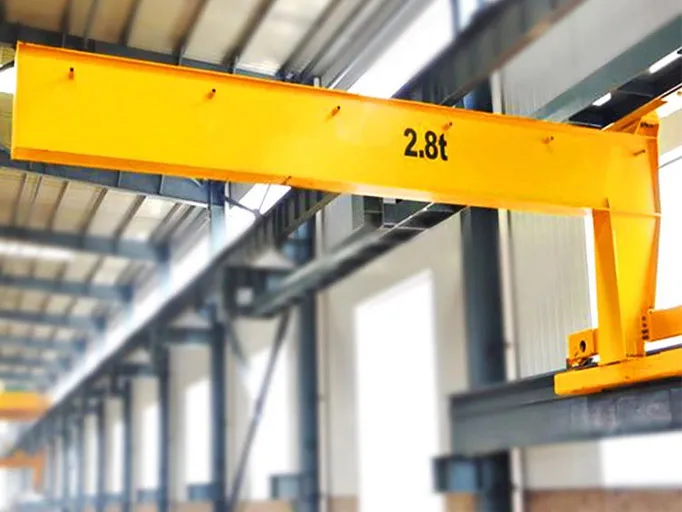
- Know the load weight – never exceed the crane’s rated capacity (clearly marked on the girder).
- Select proper rigging – use slings, shackles, or lifting beams with sufficient WLL (Working Load Limit).
- Position the crane – use the bridge and trolley to center the hook directly above the load’s center of gravity.
- Attach rigging securely – avoid unbalanced or loose connections. Use softeners on sharp edges.
- Clear the area – warn nearby personnel. No one should stand under or near the load path.
3. Lifting the Load
🔼 Raising
Press the HOIST UP button slowly. Take up slack gently. Once rigging is taut, pause and check that all slings are evenly tensioned and the load is stable.
📏 Test lift
Raise the load about 4–6 inches (10–15 cm) and hold for several seconds. Verify brakes, balance, and that nothing shifts. Do not proceed if unstable.
After the test lift is successful, raise the load to the required height, but keep it as low as practical while traveling.
4. Moving the Load
- 🚦 Signal communication: If working with a spotter, use standardized hand signals (ASME B30.2).
- ➡️ Bridge travel: Move the entire crane along the runway. Ensure the path is clear, and the load does not swing.
- ⬅️ Trolley travel: Move the hoist along the bridge. Avoid sudden starts/stops to prevent load swing.
- ⚠️ Avoid obstacles: Never pull the load sideways (side pull). This can damage the crane and cause load drop.
- 🔊 Use audible warning – sound the horn or bell when approaching personnel or blind corners.
5. Lowering & Placing the Load
- Position the load directly above its intended landing spot (pads, racks, or floor).
- Slowly press HOIST DOWN. Avoid free-fall or abrupt stops.
- When the load is about 6 inches from the ground, slow further and gently set it down.
- Ensure the load is stable before removing slings. Unhook rigging only after the hook is slack.
- Return the hook to a mid‑height position (above head level) to prevent tripping hazards.
6. Shutdown & Post-Operation
- Park the crane at a designated area – preferably away from work zones and not blocking walkways.
- Raise the hook to avoid collision with forklifts or personnel.
- Turn off the main disconnect (if equipped) and lock out the controller.
- Report any irregularities (e.g., unusual sounds, damage, limit switch failures) in the logbook.
7. Emergency Situations
🛑 What to do if:
- Power failure: Use the emergency brake release (if allowed) to lower the load slowly. Otherwise, secure the area and wait for qualified help.
- Load begins to swing dangerously: Stop all motions. Wait for swing to subside, then lower the load.
- Limit switch fails: Immediately release the control and report. Do not bypass the switch.
- Someone injured: Press emergency stop, do not move the crane, and call for medical aid.
🔐 Remember: Only trained and authorized operators may run an overhead crane. Always wear PPE (hard hat, high‑vis vest, steel‑toed boots, gloves). When in doubt, ask a supervisor.
✔️ Compliance note: Following these steps reduces the risk of load drops, collisions, and severe injuries. Regular training and inspections are mandatory under OSHA and international crane safety standards.
© Professional Crane Operation Guide – Based on ASME B30.2, OSHA 1910.179, and industry best practices.